

RXNT · Ambient AI · Healthcare · 2026
Charting Was Taking the Provider Out of the Room
An ambient AI tool that cut charting time by 70% by turning patient visits into draft notes providers review instead of write.
ROLE
Sole UX designer, end to end
TEAM
Me · 1 PM · 3 Engineers · 1 Support
SCOPE
0→1, mobile-first, then browser extension
USERS
10,000+ clinicians
OVERVIEW
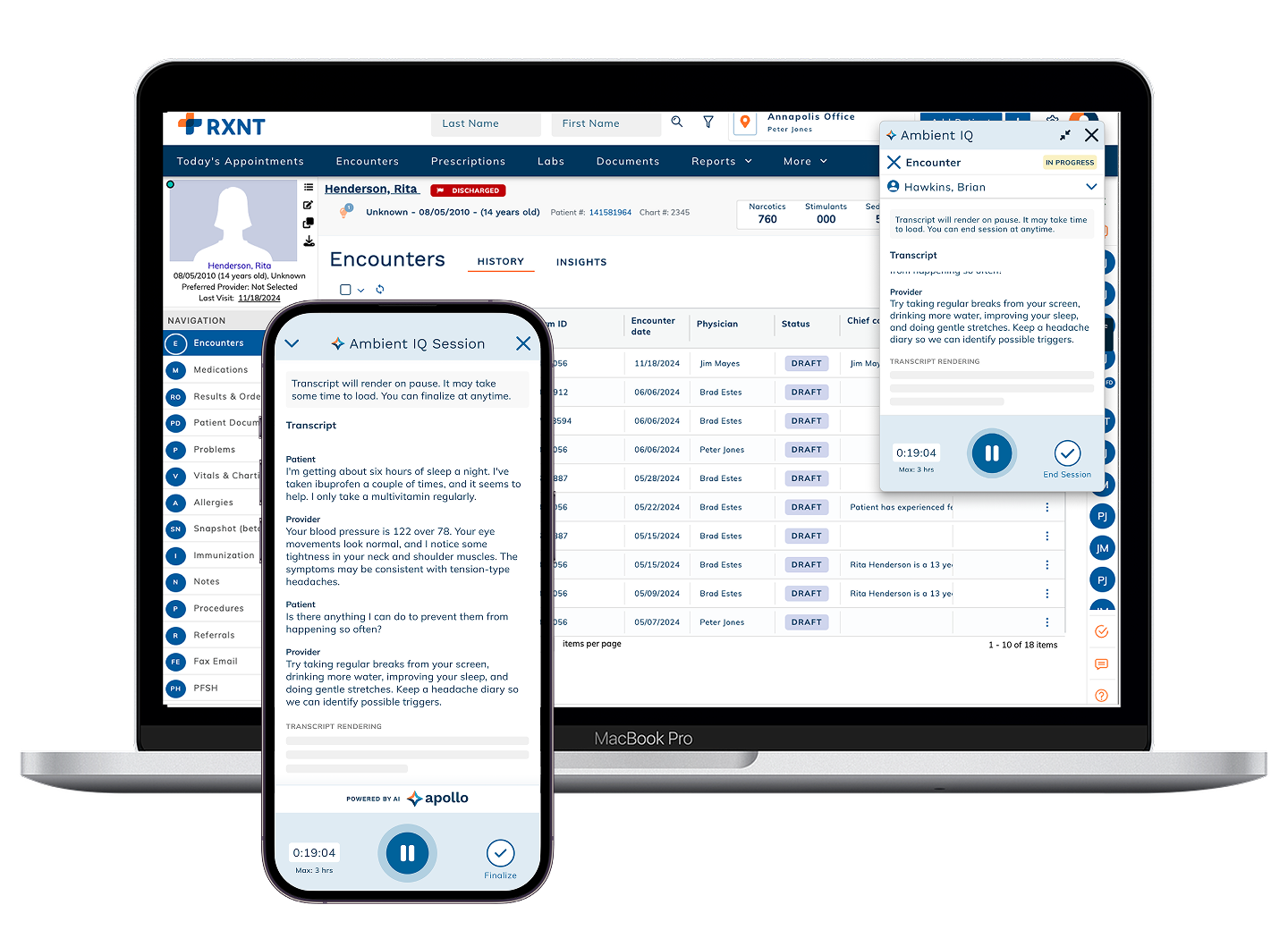
Documentation was one of the biggest sources of friction in a provider's day. I designed RXNT's ambient AI tool from zero: it listens to the visit and turns it into a structured draft note for the provider to review and sign. It launched on mobile, then came to the web through a Chrome extension.
OUTCOMES

Less time at the keyboard turned into more time with patients, without giving up accuracy.
THE PROBLEM
Every Visit Forced a Bad Choice.
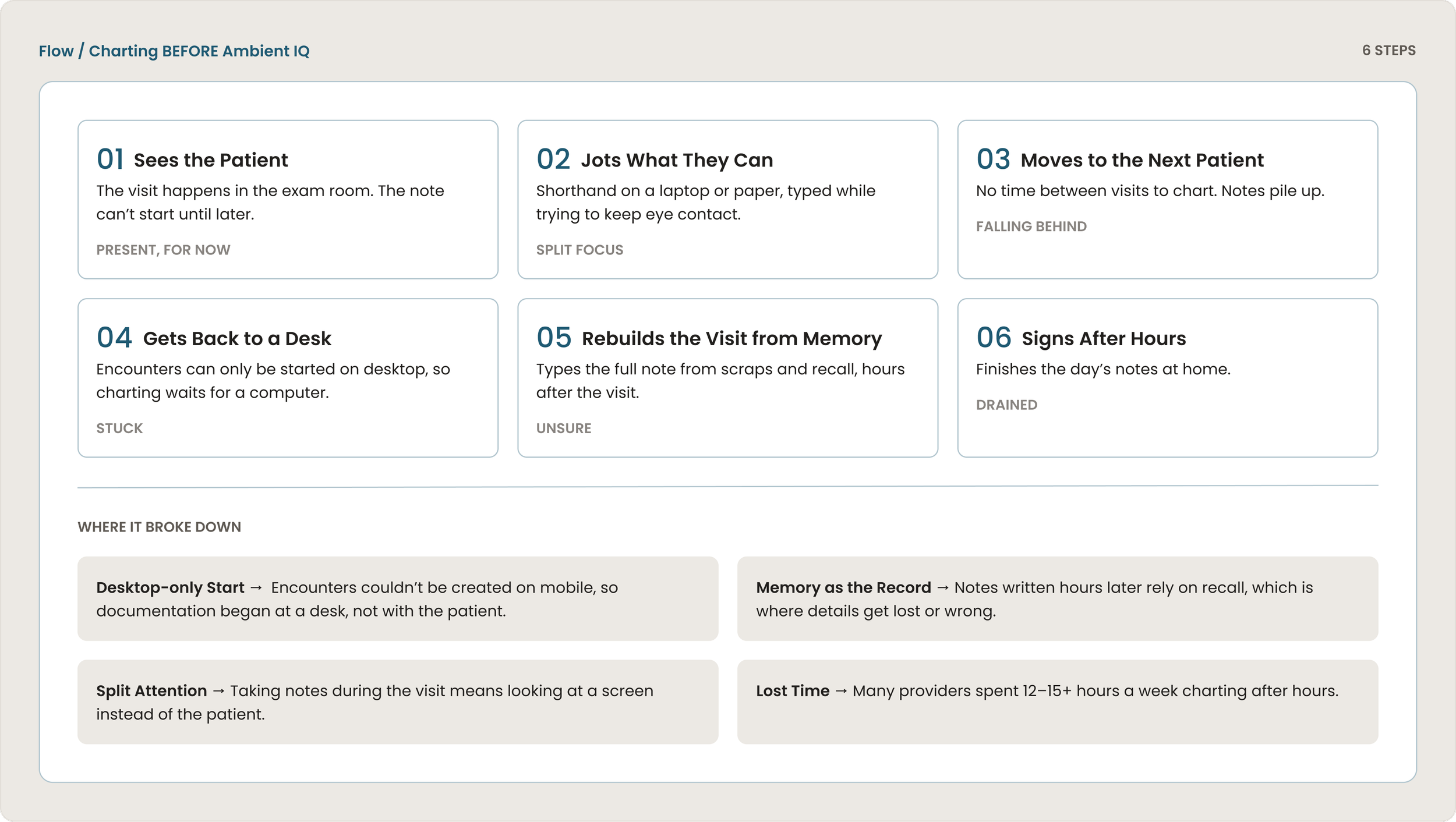
Take notes during the visit, and you lose focus on the patient. Document afterward, and you're relying on memory, which is where inaccuracies come from. Clinicians reported spending on average 12–15+ hours a week documenting outside working hours.
The workflow didn't help. Encounters couldn't be started on mobile, so providers were pushed into desktop workflows. Manual entry made notes inconsistent and error-prone. Documentation wasn't just slow. It was affecting care quality and adding to burnout.
What Research Told Us
I worked with Product and Support to analyze customer feedback, reviewed current charting workflows, and studied competitor ambient AI tools.
Documentation is a top driver of burnout and inefficiency.
Providers prioritize accuracy, speed, and control.
Mobile-only clinicians, like hospice workers, depend entirely on their phones.
Trust is the biggest barrier to adopting AI.
THE INSIGHT
We Weren't Solving a Note-Writing Problem. We Were Solving a Timing Problem.
Both bad options came down to when documentation happened. And the hardest part of writing a note wasn't the typing. It was the blank page.
→ Workflow timing matters more than interface polish. Capture the visit while it happens, and the provider's job changes from writing the note to reviewing it.
WHAT I DESIGNED
From Manual Charting to AI-Assisted Review.
Three decisions shaped it.
1. Mobile first. Then the web.
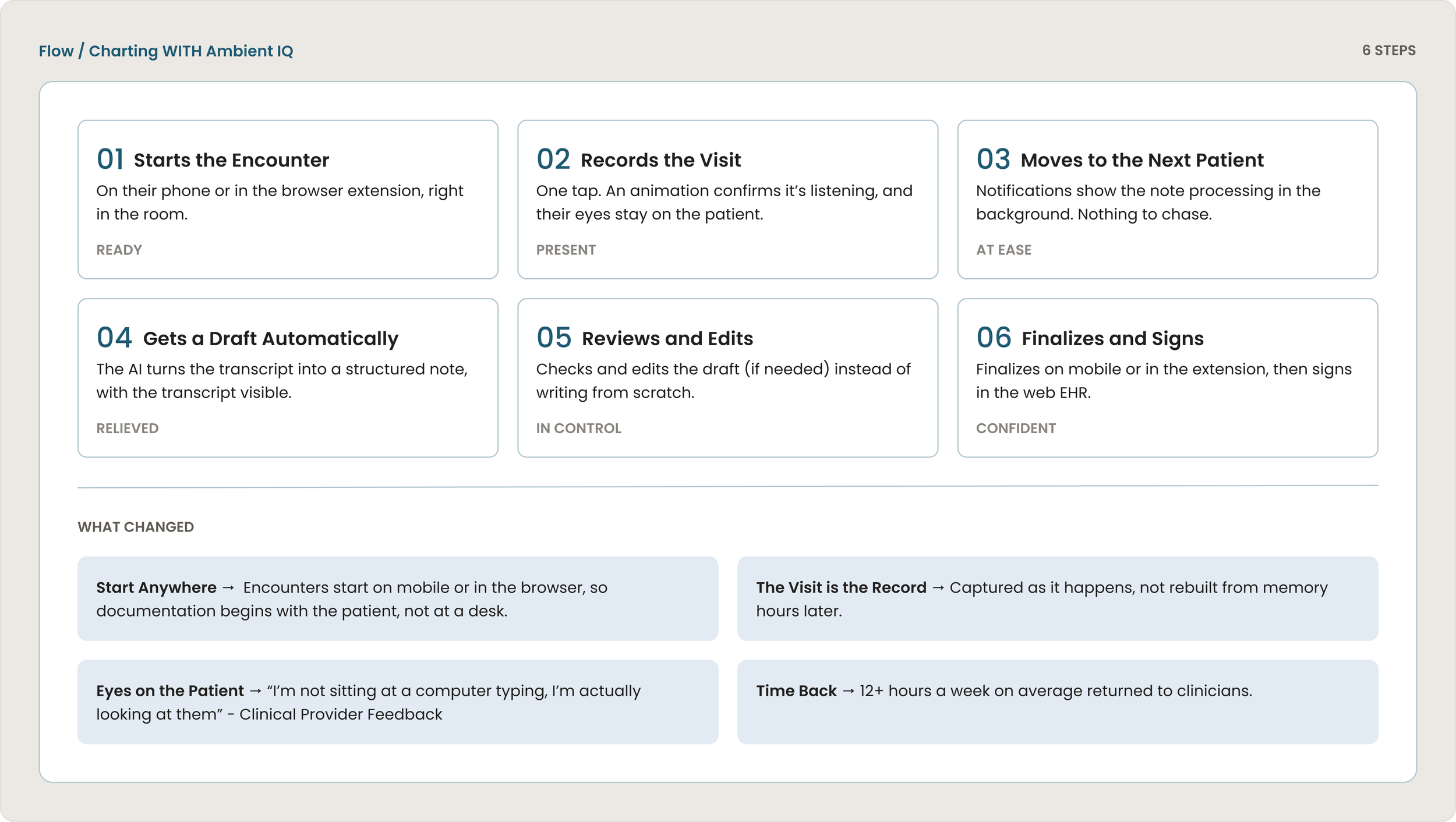
Why → At launch, the web platform couldn't support recording and transcription, and mobile-only clinicians depend entirely on their phones. Going mobile-first solved both, and made RXNT's first mobile encounter creation possible. Later, a Chrome extension brought recording into the browser for providers who chart at a desk. Notes can be finalized on either platform; signing stays in the web EHR.
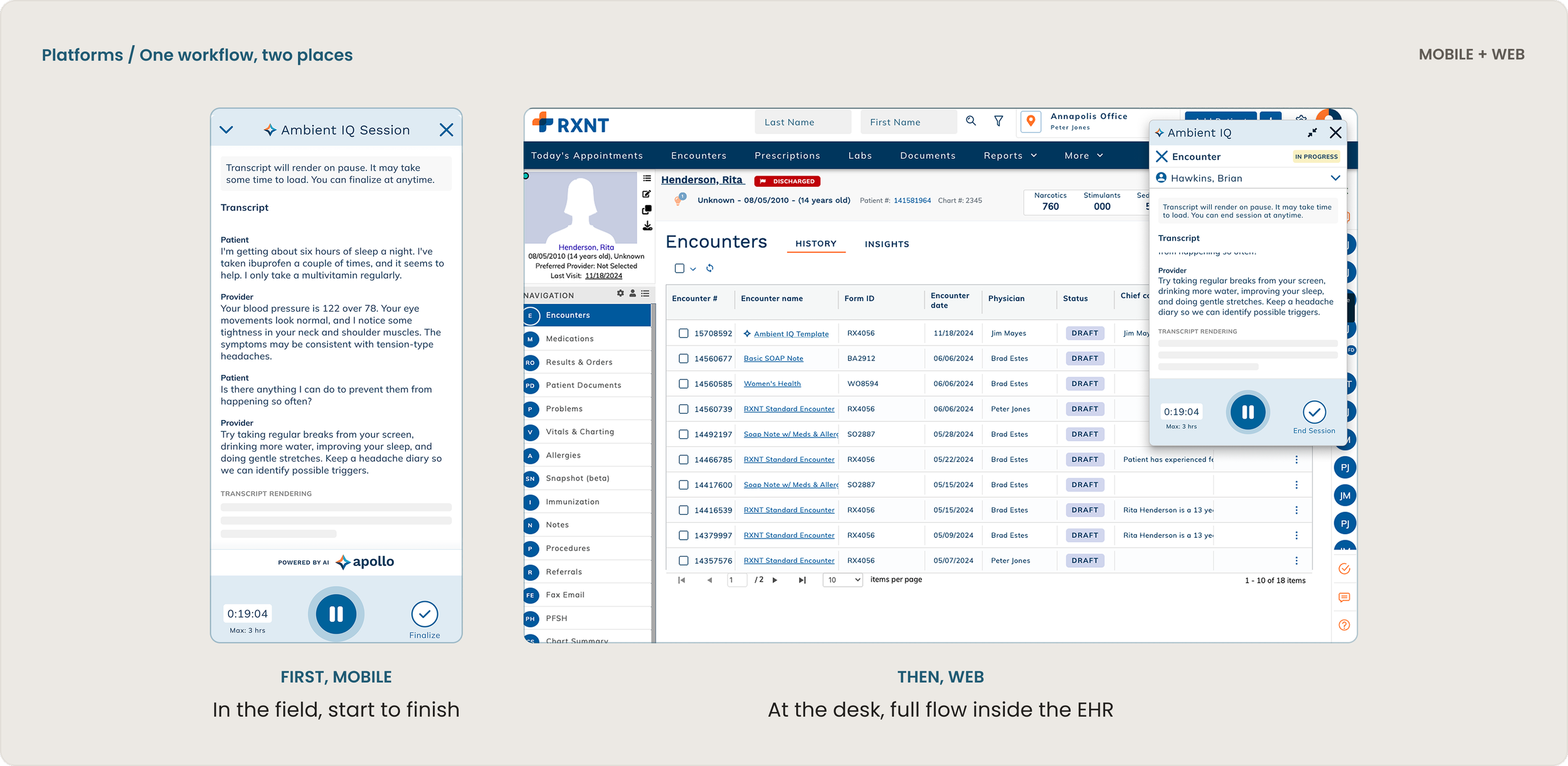
Same workflow, two homes: the phone for providers who never sit down, the browser for those who do.
2. Never make them wonder what the AI is doing.
Why → Trust was the biggest barrier, and nobody trusts a black box. Animations and device notifications show recording and processing states. Visible transcripts show what the AI heard. Inside the encounters dashboard, next-step guidance bridges the jump from phone to EHR, and a minimizable toolbar stays out of the way until it's needed.
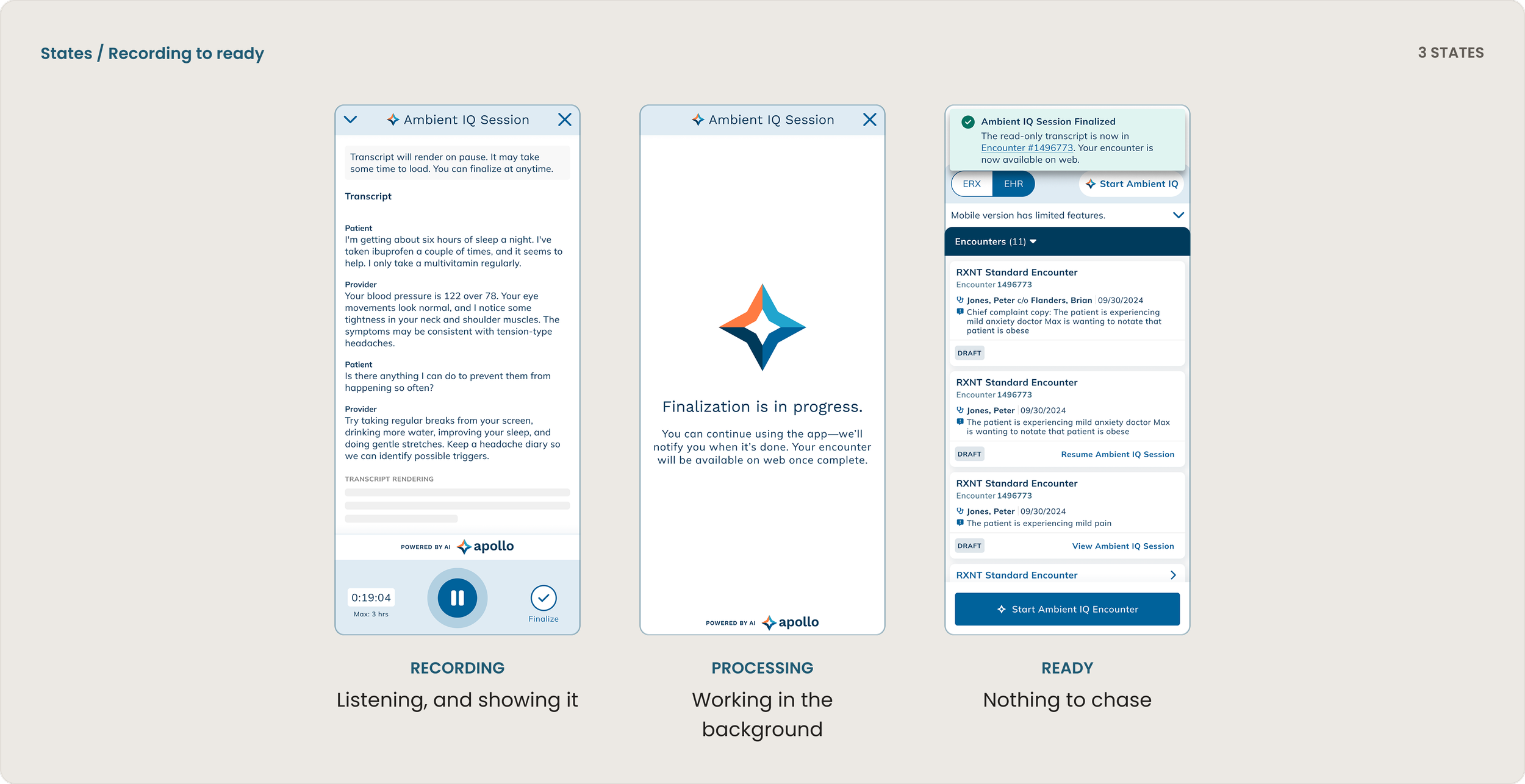
Every state answers one question: what is the AI doing right now?
3. Review > create.
Why → The biggest win wasn't speed. It was getting rid of the blank page. The AI drafts a structured note after the visit, and the provider validates and edits it before signing. Clinical documentation has no room for error, so the provider always has the last word, and that's what made trusting the AI possible.
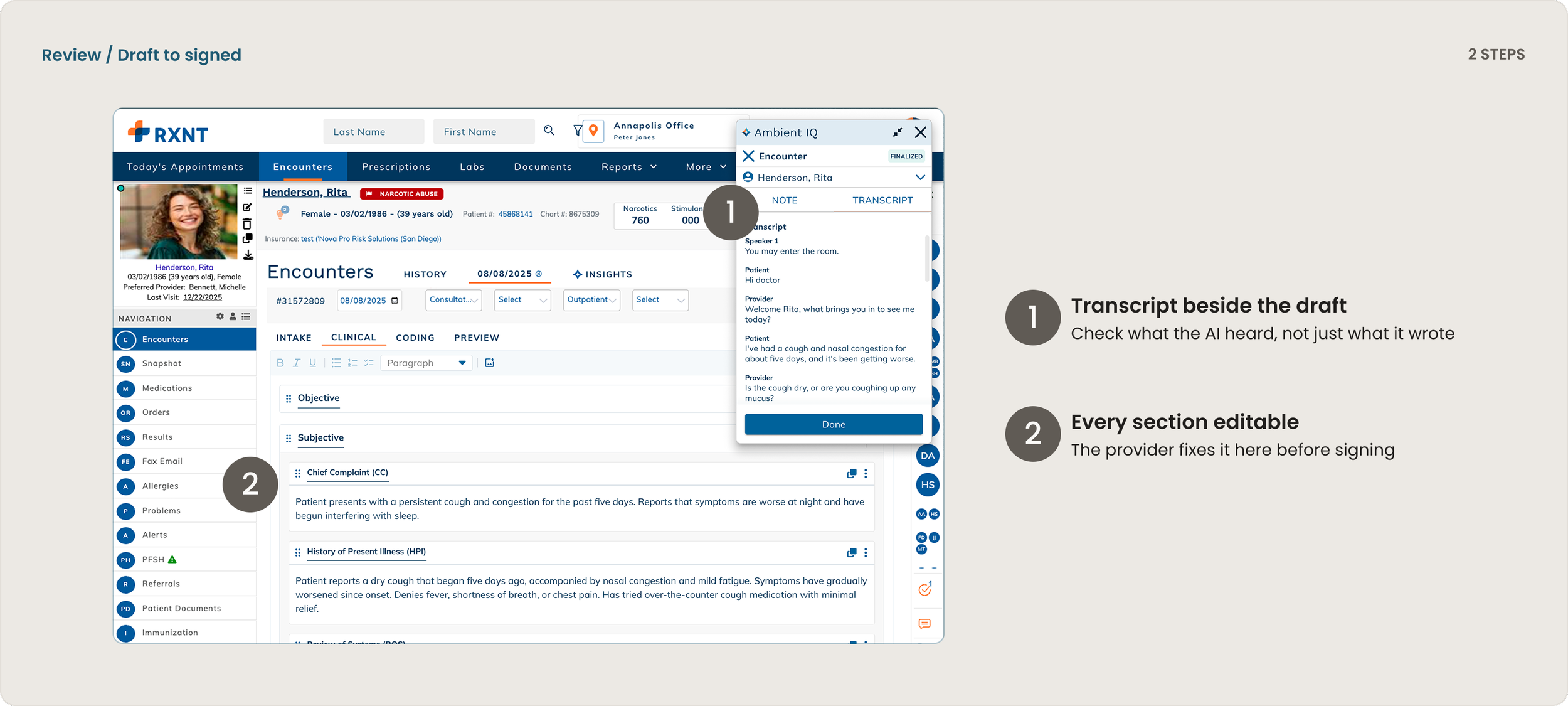
The AI writes the first draft. The provider always has the last word.
THE IMPACT
Less Charting. More Patients.
For Clinicians → The tool rolled out in phases, with accuracy and usability improving after each round of real-world feedback.
For RXNT → it meant higher provider throughput, mobile encounter creation for the first time, and a competitive differentiator resulting in new customer contracts and revenue.

WHAT’S NEXT
The Questions the AI Is Already Asking.
What if the AI helped during the visit, not just after?:
Real-time assistance is the obvious next step. The open question is how to add it without pulling the provider's attention back to a screen.
Does it have to live inside RXNT?
Clinicians on other EHRs have the same problem. A standalone tool would test whether the workflow holds up without deep EHR integration.